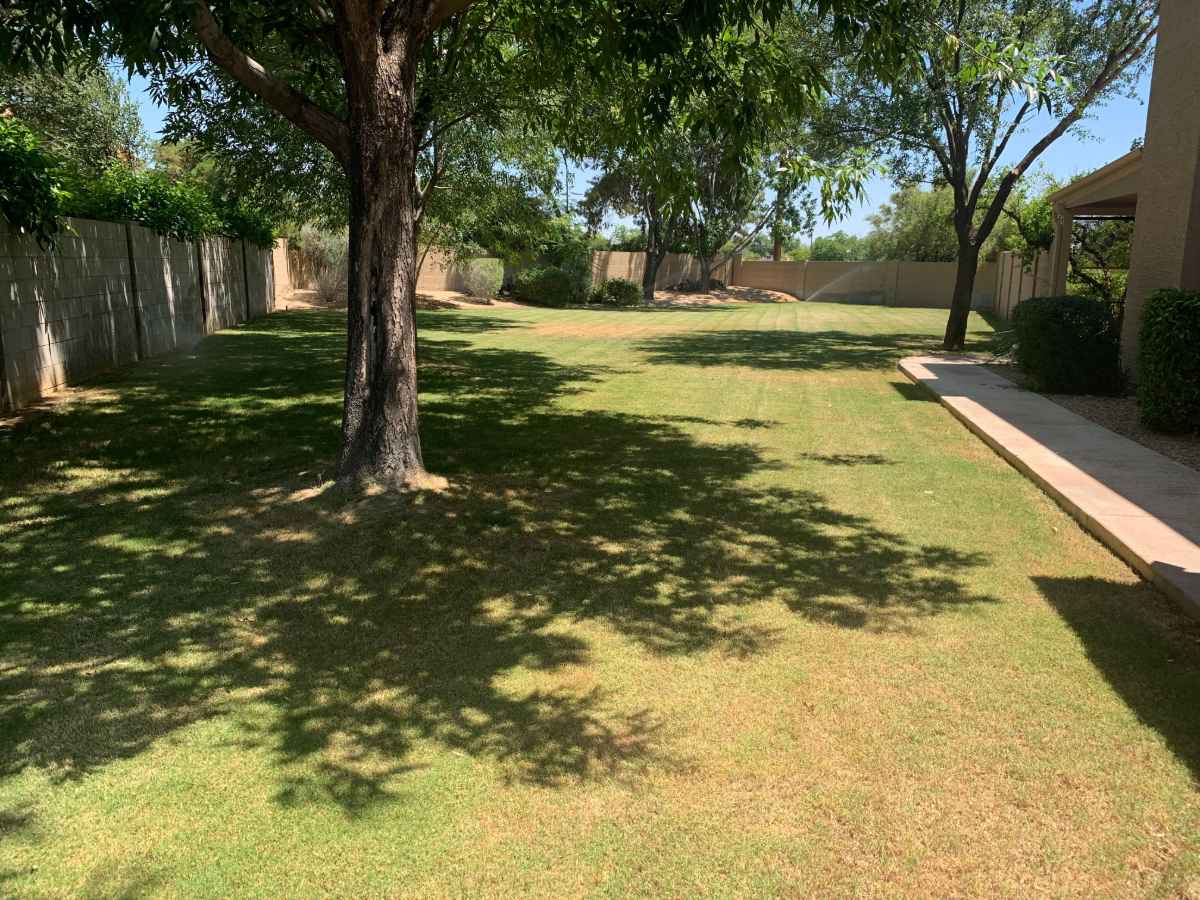
Why Lawns Fail in Prescott, Arizona: 9 Costly Reasons Homeowners Ignore
1. Understanding Prescott’s High-Desert Climate
One of the main reasons Why Lawns Fail in Prescott, Arizona is the misconception that Prescott has a mild mountain climate. In reality, Prescott sits at about 5,300 feet in elevation and experiences a full high-desert environment.
Elevation and Temperature Swings
Prescott’s elevation causes sharp temperature changes between day and night. Grass roots struggle to adapt when daytime heat stresses blades while nighttime temperatures slow growth. These fluctuations weaken turf over time, making it vulnerable to thinning and disease.
Low Humidity and Intense Sun
Low humidity means moisture evaporates quickly from both soil and grass blades. Combined with strong UV exposure, lawns lose water faster than many homeowners realize. Even frequent watering may not work its way deep enough into the soil to sustain healthy roots.
2. Poor Native Soil Conditions
Another major factor in Why Lawns Fail in Prescott, Arizona is soil quality. Prescott’s native soil is bane of any gardener or landscaper. If you have ever attempted to dig a hole here, you'll find your shovel stopped by rocks, roots, and dried clay that must be chopped through with pick. The Quad Cities are not naturally lawn-friendly, as I’m sure you well know.
Clay, Rock, and Low Organic Matter
Most Prescott soils contain heavy clay, decomposed granite, and rocks. This type of soil drains poorly yet hardens quickly, preventing soft grass roots from spreading. Without added compost or soil conditioning, lawns remain shallow-rooted and susceptible.
Soil Compaction Problems
This isn’t just a local issue, it happens everywhere. Foot travel, construction, and heavy equipment compact the soil even further. Compacted soil blocks oxygen and water, essentially suffocating grass roots. Aeration is often skipped, which accelerates lawn decline.
3. Watering Mistakes Homeowners Make
Watering errors are one of the most common explanations for Why Lawns Fail in Prescott, Arizona.
Overwatering vs. Underwatering
Many homeowners water too often but too shallowly. This creates weak roots that depend on daily moisture. Others water too little, assuming drought tolerance means no irrigation is needed. Both extremes lead to lawn failure.
Inefficient Irrigation Systems
Sprinklers designed for flat, low-elevation areas often overspray or evaporate before water reaches the soil. Drip or rotary systems calibrated for Prescott’s conditions are far more effective.
4. Choosing the Wrong Grass Type
Grass selection plays a decisive role in Why Lawns Fail in Prescott, Arizona.
Here are your best options with their pros and cons laid out:
Bermudagrass: Very drought-tolerant, handles heat and heavy traffic well, but needs full sun and can be aggressive. Often finding its way into sidewalks and places where we don’t always want grass.
Buffalograss: Extremely low water needs, native to prairies, quite low maintenance. However, the trade off is that it is sensitive to being trekked on. Best for low-traffic areas.
Zoysiagrass: Tolerates heat, drought, and some shade. Tough which is great for Prescott. Unfortunately, it is slow to establish and recover. But easy come, easy go.
Cool-Season vs. Warm-Season Grasses
Cool-season grasses like Kentucky bluegrass struggle during Prescott’s hot summers. Warm-season varieties such as Bermuda handle heat better but go dormant and brown in winter, confusing homeowners who expect year-round green lawns.
Choosing grass without understanding seasonal dormancy leads many people to believe their lawn is “dead” when it’s actually resting.
5. Seasonal Stress and Dormancy Misunderstood
Prescott lawns naturally slow growth during extreme heat, cold snaps, or drought periods. Dormancy is a survival mechanism. We often want green lawns year-round, but it isn’t always achievable. In addition, improper mowing or fertilizing during dormancy often causes irreversible damage that will cost you time, money, and headaches to fix.
6. Improper Fertilization Practices
Over-fertilizing burns grass roots, while under-fertilizing starves them. Many fertilizers sold nationally are not formulated for Prescott’s soil chemistry. Without soil testing, nutrient imbalance becomes another reason Why Lawns Fail in Prescott, Arizona.
7. Pests, Weeds, and Lawn Diseases
Weeds like goatheads and invasive grasses outcompete turf weakened by stress. Grubs and fungal diseases thrive when lawns are overwatered or poorly drained. Once pests take hold, recovery becomes difficult without professional intervention. Our notorious "Stickers" grow fast and need next to none in terms of water. They will spread faster than a wild fire if not pulled and carefully disposed of.
Smarter Alternatives to Traditional Lawns
Because of all these challenges, many homeowners rethink traditional turf. Drought-tolerant grass blends, clover lawns, native groundcovers, or xeriscaping offer sustainable alternatives that thrive in Prescott’s climate.
Frequently Asked Questions (FAQs)
1. Why does my lawn turn brown so quickly in Prescott?
Rapid evaporation, shallow roots, and intense sun exposure cause grass to dry out faster than expected. The problem can be bandaided by watering it more, but it won't turn brown quickly if your soil, fertilizer, irrigation, and grass species are tuned for efficiency.
2. Can any grass grow well in Prescott, Arizona?
Yes, but only grass types adapted to high-desert conditions with proper soil preparation and irrigation. Here are the types of grass that perform well in Prescott, Arizona.
3. How often should I water my lawn in Prescott?
Deep watering 2–3 times per week is usually better than daily shallow watering. This gives time for water to run off so your lawn never gets drowned.
4. Is fertilizer necessary for Prescott lawns?
Yes, but it MUST be applied correctly according to your choice of grass and the soil it’s planted in.
5. Should I replace my lawn with xeriscaping?
For many homeowners, xeriscaping is a more sustainable and cost-effective option. Plus, it fits the high desert style of the environment that we experience in and around Prescott.
6. What is the biggest mistake homeowners make?
Treating Prescott lawns like lawns in other climates. This misunderstanding explains much of Why Lawns Fail in Prescott, Arizona. We get all 4 seasons, have a rather dry climate, and our soil is tough to grow in. Maintaining a lawn in the Quad Cities is going to be difficult, which is why we see the lean to xeriscaping.
Conclusion: Rethinking Lawn Success in Prescott
The truth about Why Lawns Fail in Prescott, Arizona lies in climate mismatch, soil limitations, and outdated lawn-care habits. With realistic expectations, proper grass selection, soil improvement, and smarter watering, success is possible, but traditional lawns may never look like those in cooler or wetter regions.
Sometimes, the best solution isn’t fixing a failing lawn. We often have had to adapt our clients landscape so that it truly belongs in Prescott.